
If you’re delving into the world of architectural visualization, it’s likely because you recognize the immense value it adds to architectural projects. The ability to visually communicate design ideas is crucial in architecture, as it bridges the gap between conceptualization and realization. In a field where every detail counts, having the tools and techniques to accurately portray your vision is indispensable.
Architectural visualization techniques encompass a range of practices, from 3D modeling and photorealistic rendering to the integration of environmental elements and the use of color theory, aimed at enhancing the representation and understanding of architectural designs.
This blog is a deep dive into the diverse techniques that make architectural visualization a powerful tool. Whether you’re a seasoned architect or a student starting out, these insights will equip you with the knowledge to bring your architectural visions to life with clarity and creativity.
12 Techniques To Improve Your Architectural Visualizations
1. Utilizing Advanced 3D Modeling Software
In the realm of architectural visualization, the use of advanced 3D modeling software stands as a cornerstone. It’s not just about creating structures; it’s about breathing life into them.
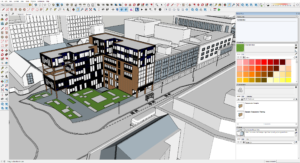
With software like SketchUp, Revit, or Rhino, you have the power to build complex models with intricate details. Imagine sculpting your designs layer by layer, where each element, from the curve of a staircase to the texture of a brick, is at your fingertips.
2. Incorporating Realistic Lighting and Textures
Now, let’s talk about lighting and textures. They are, without a doubt, the magic ingredients that transform good visualizations into great ones. When you skillfully combine natural and artificial light sources, you create a mood, an atmosphere that speaks volumes.
The play of shadows, the soft glow of dawn, or the harsh midday sun – each tells a different story. And textures? They add depth and realism. A rough concrete wall, a sleek glass panel, or a rustic wooden floor – each texture you choose adds character to your visualization.
3. Implementing Photorealistic Rendering
Photorealistic rendering is like the grand finale of architectural visualization. This is where your model transcends from a digital construct to something that looks and feels real. It’s the process of rendering your models so meticulously that they mirror reality.
The key here is attention to detail – the reflection on glass, the way light diffuses through a fabric, the shadow a tree casts. It’s a symphony of light, shadow, and texture. Remember, the goal is to make the viewer pause and question, “Is this real?”
4. Exploring Different Architectural Styles
Variety is the spice of life, and this couldn’t be truer in the world of architectural visualization. Exploring different architectural styles is not just about aesthetics; it’s about understanding and respecting the philosophy behind each style.
Be it the minimalist charm of modernism, the ornate details of baroque, or the sustainable ethos of contemporary eco-design, each style offers a unique perspective. Embracing this diversity not only broadens your design horizons but also makes your portfolio more appealing to a wider range of clients.
5. Integrating Natural Environments and Landscaping
Buildings don’t exist in isolation; they are part of a larger ecosystem. This is where integrating natural environments and landscaping comes into play. It’s about creating harmony between your structure and its surroundings.
Picture a serene garden that complements a modern villa or a rugged landscape that enhances a mountain retreat. Landscaping is not an afterthought; it’s an integral part of the design that adds context and completeness to your visualization.
6. Emphasizing Scale and Proportions
A building that’s out of scale can feel alien, while correct proportions bring a sense of balance and harmony. It’s like the difference between a building that just looks impressive and one that feels right.
In my experience, paying close attention to scale not only improves the realism of the visualization but also helps in communicating the true essence of the design to the client.
7. Utilizing Virtual Reality for Immersive Experiences

Imagine walking through a building before it’s even built. That’s the magic of virtual reality (VR) in architectural visualization. VR takes your models off the screen and into a three-dimensional space, where you can experience the design as if you were physically there.
This immersive experience is invaluable, not just for architects and designers, but also for clients and stakeholders. It allows for a deeper understanding and connection with the project. From personal experience, presenting a project in VR often elicits a ‘wow’ factor and helps in making more informed decisions.
8. Applying Color Theory in Design
Color is a powerful tool in the architect’s palette. It can influence mood, define spaces, and even affect the perceived size of a room. Understanding and applying color theory is essential in architectural visualization.
The right color combinations can bring vibrancy and life to your designs. It’s about more than just aesthetics; it’s about creating an emotional response. Whether it’s the calming blues of a bedroom or the energizing yellows of a kitchen, color can transform a space. Remember, the colors you choose are as important as the materials and textures.
9. Creating Detailed Interior Visualizations
Interior visualizations are where you get to showcase the livability of a space. It’s not just about the walls and floors; it’s about creating a scene that someone can imagine themselves in. This involves meticulous attention to detail – from the furniture layout to the lighting, from the artworks on the walls to the cushions on the sofa.
Each element adds to the story of the space. As someone who has spent hours perfecting the placement of a vase, I can attest to the difference these details make in bringing an interior visualization to life.
10. Employing Aerial and Drone Photography

Aerial and drone photography has revolutionized the way we view and present architectural projects. It provides a unique bird’s-eye view, offering a comprehensive perspective of the property, its surroundings, and its relation to the landscape.
This technique is especially useful for large-scale projects, as it captures the scope and scale in a way that ground-level photography can’t. Aerial shots add drama and a sense of grandeur to your presentations, making them more engaging and informative.
11. Using Post-Processing Techniques
Post-processing is where good visualizations are polished into great ones. This stage involves editing your renders to enhance colors, adjust lighting, or add effects that weren’t possible in the 3D model.
Whether it’s adjusting the contrast for more depth or adding a lens flare for dramatic effect, post-processing gives you the control to fine-tune your images to perfection.
12. Incorporating Human Elements for Scale
Last but not least, incorporating human elements into your visualizations is crucial for conveying scale and relatability. Adding people to your renders helps viewers understand the size and scale of a space. It also adds a layer of realism and context. When people see others interacting with the space, whether it’s someone reading in a corner or a group chatting in a lobby, it helps them envision how the space can be used.
It’s a small detail that makes a big difference in making your visualizations more approachable and engaging.
What are Digital 3D Modeling Techniques
Digital 3D modeling techniques are the backbone of creating realistic and immersive architectural visualizations. These techniques involve using specialized software to create three-dimensional representations of buildings and structures.
Imagine being able to construct a building from the ground up in a virtual environment, where every brick, window, and design element can be manipulated and viewed from all angles. This is what 3D modeling offers.
One popular technique in 3D modeling is polygon modeling. It’s a process where you create a mesh out of points, lines, and faces. This method is incredibly versatile, allowing for high levels of detail in your models.
It’s perfect for creating complex architectural structures with intricate designs. The key here is understanding how to efficiently use polygons to create realistic forms without overloading the model with unnecessary details.
Another technique widely used is NURBS (Non-Uniform Rational B-Splines) modeling. This method is fantastic for creating smooth, curved surfaces like intricate staircases or sleek building facades. NURBS modeling is about precision and fluidity, ideal for designs that require a high level of accuracy.
Conclusion
The field of architectural visualization is a dynamic blend of art and technology, requiring a deep understanding of various techniques to bring architectural concepts to life.
In conclusion, mastering architectural visualization techniques is more than just learning software or following trends. It’s about understanding the intricacies of visual communication and how it can enhance the storytelling of architectural designs. As you venture further into this field, keep an open mind to the endless possibilities these techniques offer.
My suggestion? Experiment, explore, and don’t be afraid to blend different methods to find your unique style. Your journey in architectural visualization is not just about rendering buildings; it’s about crafting visual narratives that resonate and inspire.
Frequently Asked Questions (Architectural Visualization Techniques)
What is architectural visualization?
Architectural visualization is the practice of creating digital models and images that represent architectural designs. This process involves various techniques, including 3D modeling, rendering, and virtual reality, to create lifelike images and animations of buildings, helping in design decision-making and marketing.
How do you visualize architecture?
To visualize architecture, architects start by creating a basic structure in a 3D space, then add details like textures, lighting, and landscaping. The goal is to create a visual that accurately conveys the design’s look, feel, and function.
What are visuals in architecture?
In architecture, visuals are images or representations that depict the design and features of a building. They provide a tangible way for clients and stakeholders to understand and engage with a project. These visuals are created using various techniques and software, offering an accurate and compelling view of the proposed architectural designs.
What are the techniques of architectural rendering?
Architectural rendering involves techniques like 3D modeling, texturing, and lighting to create realistic images of buildings. 3D modeling lays the foundation, while texturing and lighting add realism and depth. Post-processing is where the render is refined, adjusting aspects like color balance and contrast to create an accurate representation of the architectural design.