
If you’re venturing into architecture, you’ve probably realized the importance of 3D modeling and rendering. It’s a game-changer in the field, bringing designs to life and changing how projects are presented. It’s essential for architects, students, and enthusiasts alike to get a grip on this tech to stay ahead in this ever-evolving industry.
3D modeling and rendering in architecture are essential for visualizing designs before construction, allowing for adjustments and improvements. This process enhances client understanding, saves time and resources, and facilitates better design decisions.
The journey through this blog will unfold the intricacies of 3D modeling and rendering in architecture. You’ll discover how these tools bring designs to life, the impact they have on the architectural process, and why they are indispensable in modern architecture.
Fundamentals of 3D Modeling
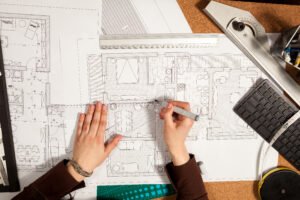
3D modeling is the process of creating a mathematical representation of any three-dimensional surface or object via specialized software.
It’s like sculpting, but in the digital world. Imagine you’re a sculptor, but instead of clay or marble, your material is pixels and your tools are algorithms.
Types of 3D Models
There are primarily two types of 3D models: solid and surface models. Solid models define the volume of the object they represent and are more realistic, but also more complex. They’re like the bones and flesh of a building, providing a complete view from every angle.
On the other hand, surface models are more like the skin, representing only the surface of an object. These are often used in applications where internal details are less important, like in video games or movies.
In architecture, solid models are paramount. They allow you not only to visualize the exterior of a building but also to delve deep into the intricacies of its interior. It’s like having X-ray vision, where you can see the load-bearing structures or the HVAC system as easily as the façade.
Popular 3D Modeling Softwares
When it comes to choosing the right software, the plethora is both a blessing and a maze. Some of the most popular 3D modeling software in architecture include AutoCAD, SketchUp, and Revit. Each has its unique strengths.
- AutoCAD, a veteran in the field, is known for its precision and is widely used for technical drawings.
- It’s like the Swiss Army knife of 3D modeling – reliable and versatile.
- SketchUp, meanwhile, is more intuitive and user-friendly, making it a favorite for beginners or those looking to quickly bring their ideas to life.
From my personal experience, Revit stands out for architectural 3D modeling. It’s not just about creating standalone models; it’s about creating intelligent, interconnected systems that reflect how buildings truly come together.
Imagine constructing a digital twin of a building where every element is in sync, from the architectural design to the electrical systems.
3D Rendering: What is it and how does it work?
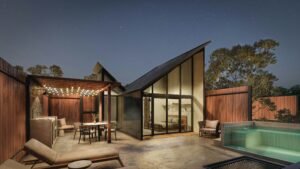
Imagine you’re a painter, and you’ve just finished sketching the outline of a beautiful landscape. Now, it’s time to bring it to life with colors, textures, and lighting. This is what 3D rendering is to the world of architecture and design.
It’s the process of adding lifelike qualities to a 3D model, transforming it from a wireframe into a vibrant, realistic image. This magic happens through rendering software, which uses complex algorithms to simulate light, shadows, textures, and other physical properties.
Rendering Process
The rendering process is a fascinating journey from model to masterpiece. It begins with your 3D model. The software then layers this skeleton with textures, resembling the materials you’d see in real life, like brick, glass, or wood.
The final step is lighting, which breathes life into the model. It’s like the sun rising, casting light and shadows, and revealing the full glory of the landscape.
But it’s not just about slapping on textures and lights. The rendering process is both an art and a science. It requires an understanding of how materials interact with light, how textures convey emotion, and how the right angle can tell a story.
Real-time vs. Pre-rendering
Real-time rendering, as the name suggests, happens in, well, real time. It’s the technology behind video games and virtual reality, where the images are rendered on the fly as you interact with the environment. It’s like improvisational theater, where the performance changes based on the audience’s reactions.
Pre-rendering, on the other hand, is like a meticulously planned Broadway show. Every detail is crafted in advance, allowing for higher quality and more complex effects. This method is often used in architecture and film, where each frame can take hours to render, but the result is a visual feast, rich in detail and realism.
Lighting and Texturing in Rendering
Lighting in rendering is what makes or breaks the realism of your architectural visualization. It’s about understanding how light behaves – how it bounces off surfaces, creates shadows, and sets the mood.
Texturing, on the other hand, is about giving surfaces a sense of touch and feel. It’s the difference between looking at a brick wall and feeling its roughness in your mind.
Differences between 3D modeling and 3D rendering.

Differences between 3D modeling and 3D rendering is like differentiating between the architect who designs a building and the painter who brings it to life with color and texture.
Both are essential in the creation of architectural masterpieces, yet their roles, tools, and outcomes are distinct.
Purpose
The purpose of 3D modeling is to create a digital skeleton of an object. It’s the process of constructing the form, dimensions, and structure, much like an architect drawing up blueprints.
In contrast, 3D rendering is about bringing this model to life. It’s like the stage where a painter adds colors, textures, and lighting to a sketch, transforming it into a vivid, realistic image.
Tools and Techniques
For 3D modeling, tools like AutoCAD, SketchUp, and Revit are often used. They allow architects and designers to build precise, detailed models. Techniques involve creating wireframes, adding geometrical shapes, and defining dimensions.
3D rendering, however, relies on software like V-Ray or Lumion, which focus on adding realistic lighting, shadows, and textures. The techniques are more about visual effects and photorealism, like choosing the right angle of sunlight or the texture of brick walls.
Application in the Design Process
3D modeling is the first step in the architectural design process. It’s where you flesh out the dimensions and spatial relationships of a building. 3D rendering, on the other hand, comes later. It’s used to create compelling visuals to convey the final look of the project.
It helps in showcasing the design to clients or stakeholders, providing them with a tangible, realistic view of the end product.
Output and Visualization
The output of 3D modeling is a digital model – a representation of the structure in three dimensions. It’s like looking at a digital clay model of a building. The output of 3D rendering, however, is a lifelike image or animation.
It’s akin to viewing a photograph of the finished building, complete with textures, colors, and lighting that evoke emotions and give a sense of realism.
Time and Resource Investment
3D modeling can be relatively quick, depending on the project’s complexity. It’s about building the structure, which can be straightforward for experienced designers. Rendering, though, is more resource intensive.
It requires powerful hardware and more time, especially for high-quality outputs. The level of detail in lighting and texturing can turn rendering into a time-consuming process.
Which is better 3D Modeling or 3D rendering for Architecture?

When it comes to architecture, the debate between the supremacy of 3D modeling and 3D rendering is like comparing the importance of a hammer to a paintbrush in building a house. Both are indispensable tools in the architectural process, each serving its unique purpose and complementing the other.
Impact on Client Presentation
When presenting to clients or stakeholders, 3D rendering often takes the front seat. It’s the tool that helps people without technical architectural knowledge to visualize the final project. A beautifully rendered image or animation can evoke emotions and excitement, making it a powerful tool for winning pitches and getting project approvals.
3D modeling, while less glamorous in presentations, is crucial for making accurate and informed decisions during the design process. It’s more about function than form, but without it, the form might not stand up to real-world constraints.
Technical Requirements and Skills
3D modeling demands a strong understanding of architectural principles, mathematics, and spatial awareness. It’s a skill that requires precision and attention to detail. Rendering, on the other hand, requires an artistic touch, an understanding of lighting, texture, and color theory. It’s more about creating a mood and less about structural accuracy.
Integration in the Architectural Workflow
In the workflow of an architectural project, 3D modeling and rendering play different, but equally important roles. Modeling is a continuous process that evolves through the design phase, constantly adapting to new information and changes in the project.
Rendering, while it can occur at various stages, is often most impactful in the final stages, where it’s used to showcase the completed design in its best light.
Conclusion
3D modeling and rendering stand as crucial tools. They transform abstract ideas into vivid, tangible representations, significantly improving communication between architects and clients, and elevating the overall quality and efficiency of architectural projects.
As we wrap up, it’s clear that 3D modeling and rendering are more than just digital tools; they are the bridge between an architect’s vision and the client’s understanding.
They empower architects to explore creative realms, ensuring that every angle, texture, and light in a design is as close to reality as possible. Embracing these technologies will not only improve your designs but also elevate your architectural storytelling.
Frequently Asked Questions (3D Modeling and Rendering in Architecture)
What is architectural 3D rendering?
Architectural 3D rendering is the process of creating two-dimensional images or animations showing the attributes of a proposed architectural design. These images are generated using 3D software, showcasing the design’s realistic aspects, such as textures, lighting, and materials.
What is 3D modeling and rendering?
3D modeling and rendering in architecture involve creating a digital model of a structure and then producing realistic images or animations from it. This process allows architects to visualize and refine buildings before they are constructed.
What is 3D model in architecture?
A 3D model in architecture is a digital representation of a building or structure, constructed within a three-dimensional framework. It allows architects to explore design elements in a virtual space, offering a detailed view of the project.
What are the 4 types of architectural rendering?
Photorealistic rendering creates detailed, life-like images, while conceptual rendering emphasizes ideas with less detail. Walkthroughs are animated videos that showcase a design, and virtual tours offer an interactive 3D exploration of a space, enhancing client presentations with immersive experiences.